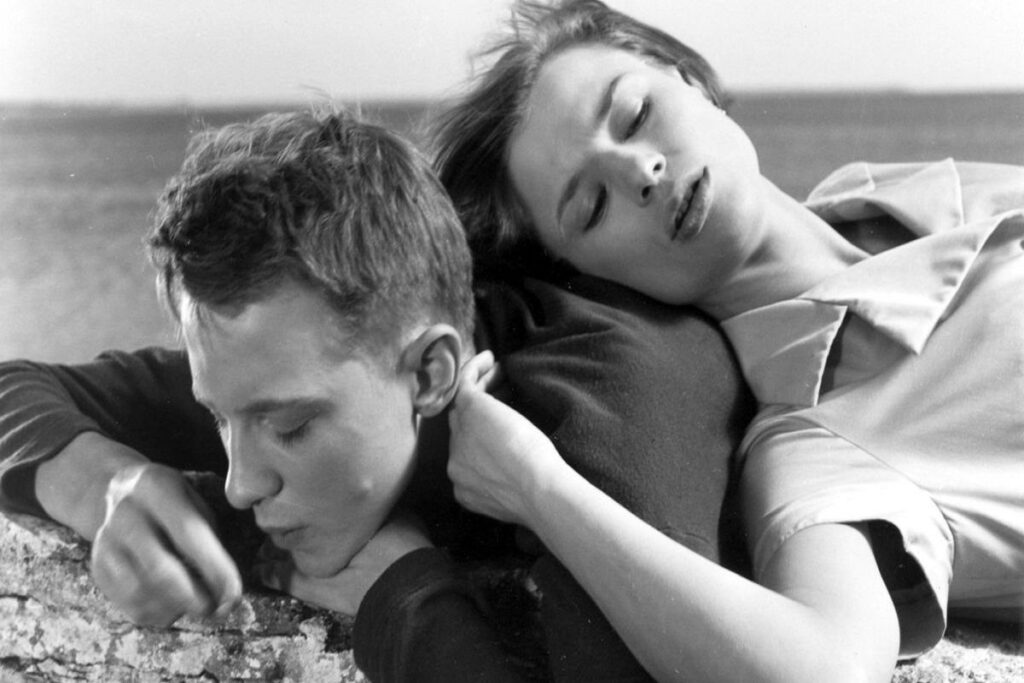
Ingmar Bergman’s films are not simple human dramas. He delved into human lives and analyzed human psychological and spiritual conditions such as love, fear, isolation, reduction, suffering, existential crisis, and vulnerabilities. Therefore, his films are a writ of human psycho analysis. He also questioned God’s silence amid human suffering and despair. His minimalistic chamber drama, Through a Glass Darkly, reflects those psychological and spiritual conditions of humans.
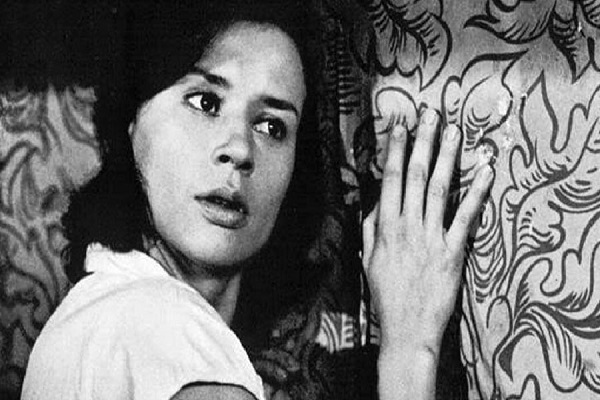
Bergman was born and brought up in a strict Christian household. His father was a Lutheran minister. The strictness, punishment, and the guilty conscience of his religious upbringing tormented Bergman throughout his life. They overshadowed the religion’s openness and love. Therefore, he started questioning God’s existence from adolescence. The same ideology is reflected in his films as well. His 1961 film Through a Glass Darkly is about the reduction and conquest of certainty. Karin (Harriet Andersson) feels the existence and invocation of God through the attic wall. However, she discovers a stone-faced spider later and confirms that she has seen God. When delusions of religion are eradicated, humans become vulnerable and encounter naked, brutal reality. God does not appear to assist humans. Karin has been suffering from acute schizophrenia and has just returned from the mental hospital. She desperately seeks God’s presence and assistance. But God does not appear and soothes her. Instead of God, she discovers a stone-faced spider, but she confirms that she has seen God. God does not appear to her as an angel, but as a giant stone-faced spider. Her religious faith is shattered, and she is reduced to a vulnerable human with no certainty or conviction.
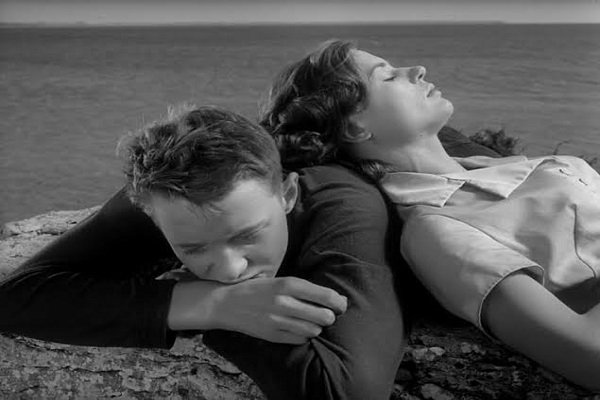
In Through a Glass Darkly, Bergman vividly shows the suffering and pain of disintegrated and isolated family members. David (Gunnar Bjornstrand), Martin (Max von Sydow), Karin, and Menus (Lars Passgard) come to a remote, barren Swedish island to spend summer holidays. They stay together but remain isolated, failing to connect. Karin has withdrawn from her husband, Martin. Martin tries his best to take care of Karin, but fails to connect with her emotionally. Karin’s brother, Menus, is sexually frustrated and cannot connect with his father, David. David is emotionally distant from both his son, Menus, and daughter, Karin. He suffers writer’s block and even exploits Karin’s illness as the subject of his novel. Without heart connections, the lives of isolated and disintegrated family members are bound to be painful and traumatic.
In Through a Glass Darkly, Ingmar Bergman brilliantly portrays suppression, illusions, and delusions of sexuality. Both Karin and her brother, Menus, are isolated, unstable, vulnerable, confused, and sexually frustrated. Therefore, quite naturally, Karin is more attracted to Menus’s immaturity and youth than Martin’s maturity, pragmatism, and restraint. So, she withdraws from Martin and exhibits her incestuous behaviors toward Menus.
When Karin is taken away to the mental hospital again aboard a helicopter ambulance, David utters an important sentence at the end of the film, “Love is God, God is love”. Even though Bergman later regretted it, this sentence carries great importance. Only love can bind us together and bring peace to the world. The beloved almighty is also a symbol of well-being, positivity, and optimism. Therefore, God exists among humans. This is a universal truth for ages, centuries, and millennia. Instead of searching desperately elsewhere, humans should strive for love and connection. Only then can humans feel God’s presence.
The title, Through a Glass Darkly, was taken from the New Testament (1 Corinthians 13:12) and carries a deep philosophical meaning. In olden days, mirrors were made of polished metals like bronze. So, it would reflect obscure images of the person with a dark background. The haziness and darkness depend on the metal’s polish. Even today, if anybody looks through dark glass, the world appears dark. Similarly, our perspectives of the world depend on our psychological conditions. A frustrated or depressed person finds the world pessimistic. Therefore, the person does not feel the existence of the beloved almighty. God appears to be cold, cruel, absent, and silent. Karin has been suffering from acute schizophrenia. She is isolated, depressed, and sexually frustrated. Therefore, quite naturally, she wouldn’t see an optimistic world and the benevolent and merciful presence of God. In this painful and traumatic situation, God appears to her as a giant, stone-faced spider.
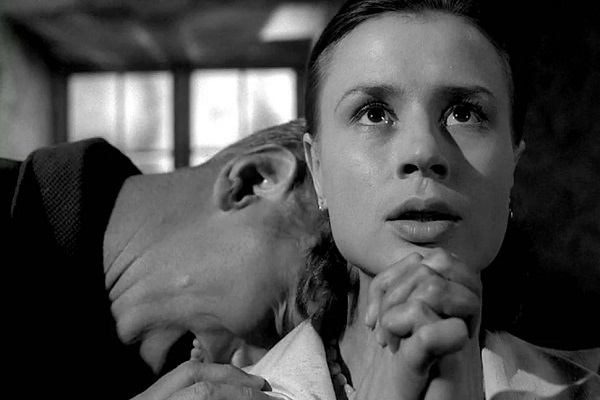
Through a Glass Darkly is widely considered the first film of Bergman’s famous Silence of God or Faith trilogy. He initially confirmed the categorization but later retracted it. This film is the first collaboration between Bergman and the legendary cinematographer Sven Nykvist. It was also the first Bergman film to be shot on the remote, barren Swedish island of Faro, on Nykvist’s recommendation. Bergman was married to concert pianist Kabi Laretei during the making of this film, and he dedicated it to her. Through a Glass Darkly was born from a simple idea that love is God, and God is love. However, Bergman retracted later and regretted using this line in the end. Through a Glass Darkly chronicles the events that happened to Karin, Martin, David, and Menus in a night and a morning while spending holidays on a remote, barren Swedish island. So, it looks like a chamber drama. Bergman’s screenplay elaborates the psychological conditions of a disintegrated family’s isolated characters, Karin, Martin, David, and Menus. Harriet Andersson received worldwide critical acclaim for her incredible portrayal of Karin. She portrayed Karin’s mental sickness, religious delusions, suppressed sexuality, vulnerabilities, instability, and heartbreak through her outstanding acting and facial expressions.
Following Sven Nykvist’s recommendation, Bergman shot Through a Glass Darkly on the remote, barren Swedish island of Faro. Instead of film noir-style, high-contrast, black-and-white cinematography, Nykvist chose graphic tone cinematography, using soft and radiant lights. He used natural light during dawn or twilight for outdoor scenes, and reflected, bounced, or diffused light for indoor scenes. Nykvist captured the psychological conditions, isolation, and vulnerabilities of the four characters, Karin, Martin, David, and Menus, in close-ups, using radiant, diffused light, minimum camera movements, and long takes. The mental suffering, isolation, and frustration of the characters are incredibly portrayed against the backdrop of the remote, barren Faro island. Bergman filled Through a Glass Darkly largely with silence, without any heavy sound effects or music pieces to portray the isolation and emotional turmoil of the characters. Real, atmospheric sounds such as the blowing of wind, waves crashing on the shore, sounds of crickets, and ship horns were used in the film. Four interpretations of sarabande from the Cello Suite No 2 in D minor, BWV 1008, were used after the incestuous encounter between Karin and Menus.