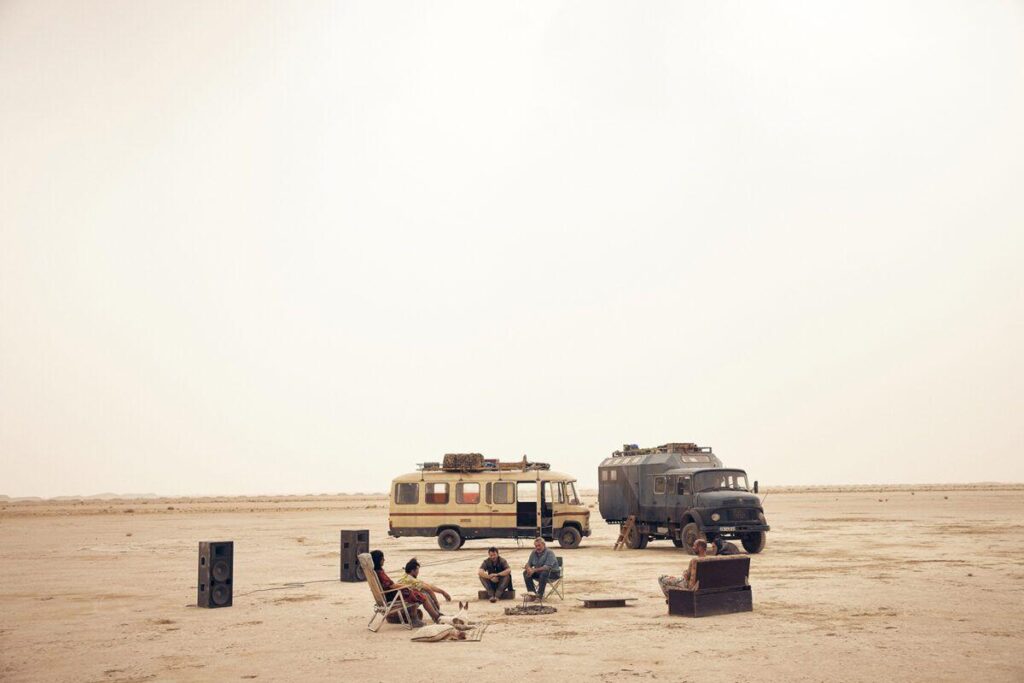
Oliver Laxe’s Sirat explores both physical and metaphysical aspects of life. On one hand, it portrays transcendental life; on the other, it shows that death is inevitable. There is no harm in tasting the limitless freedom of life. But life’s adversities should also be accepted and embraced with open arms. Both life and death coexist in this world, and both are eternal truths.
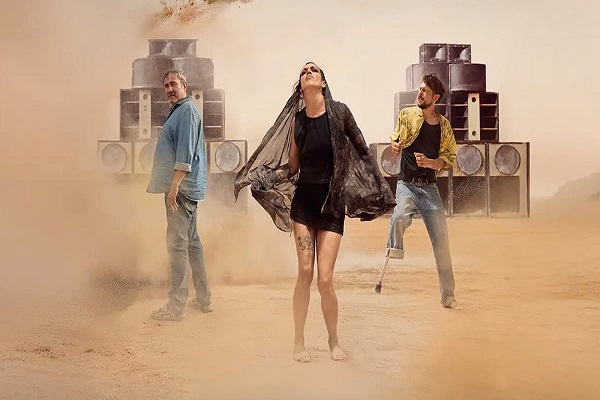
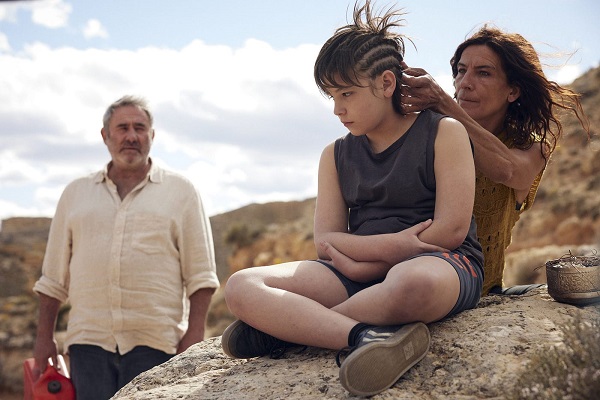
In Sirat, a father, Luis (Sergi Lopez), searches for his lost daughter, Mar, along with his son, Esteban (Bruno Nunez Arjona), in Southern Morocco. While distributing her pictures, they happen to meet and befriend a group of ravers at a rave party. When a group of soldiers commands them to vacate the site immediately, the ravers, Bigui, Jade, Stef, Josh, and Tonin, attempt to flee the rave party due to the breakout of a World War III-type war. While driving farther south toward the Mauritanian border, Luis and Esteban tag along with the ravers, who initially try to dissuade them but accept them later. During this journey, they share food and other substances and remain together. But the world does not always provide us with the ecstasy of life; sometimes, it throws us into an abyss of uncertainty and adversity. Both limitless opportunities and countless adversities coexist side by side, and there is no escape from them. While driving across the picturesque deserts of Southern Morocco, the ravers and the father-son duo encounter death. Luis’s car rolls backward and falls off a mountain cliff, killing Esteban. Landmines kill Jade, Tonin, and Bigui, and destroy two vans. Finally, Stef, Josh, and Luis walk toward a rocky hilly area, risking their lives, and survive. Director Oliver Laxe weaves the film with both transcendental life and nail-biting survival. Oliver Laxe himself attended multiple rave parties. Therefore, he chose real-life ravers to portray the characters, which added raw emotions and vibes to Sirat.
Director Oliver Laxe envisioned trucks passing through a desert long ago. He added a group of ravers and a bereaved father searching for his lost daughter to the original idea to make Sirat. Mauro Herche’s dynamic and immersive cinematography captures the magnificent images of the dusty Moroccan Sahara desert under scorching sunlight, creating a hypnotic and meditative experience for the viewers. Herche’s multiple long tracking shots flawlessly establish the characters in the surroundings. Sairat was shot both in Spain and Morocco. The crew experienced multiple technical challenges due to sandstorms and scorching heat while filming in Southern Morocco.
Two major aspects of Sirat are sound design and music. Sound editor Laia Casanova has brilliantly designed the sounds of wind, sandstorms, and desert crickets, juxtaposing them with absolute silence and creating a hypnotic impact on viewers. French composer Kangding Ray has used electronic scores filled with vibrating pulses of rhythmic bass during rave parties, and soothing, melancholic scores when characters encounter death. The sound and music in the film vividly portray the transcendental life, its limitations, and vulnerabilities.