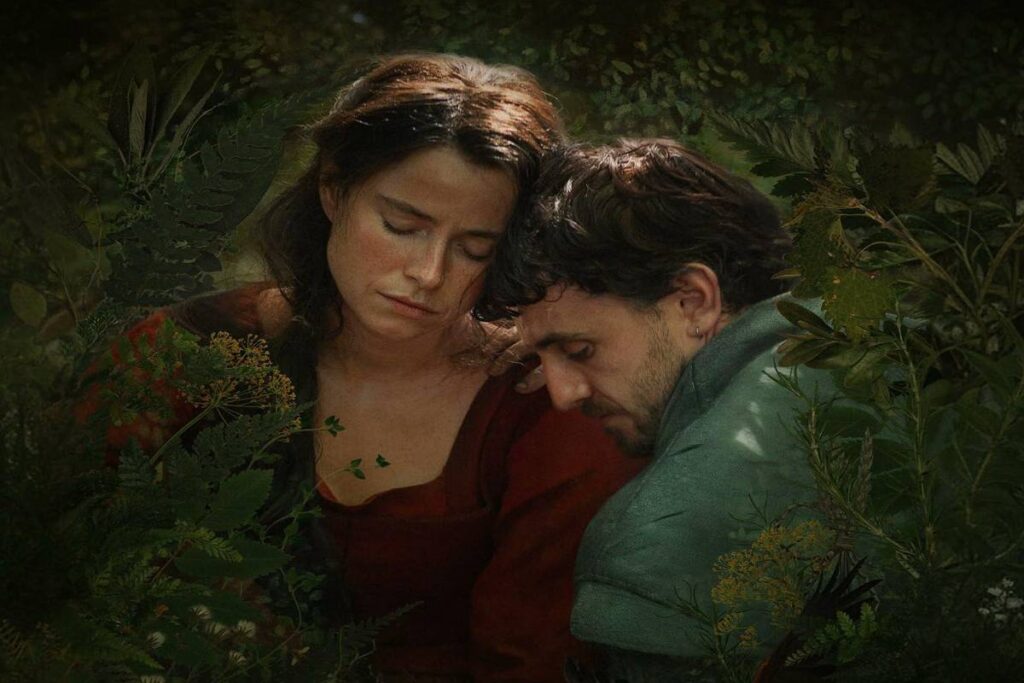
Chloe Zhao’s Hamnet, based on Maggie O’Farrell’s 2020 novel of the same title, portrays William Shakespeare’s romance, family life, and the influence of his only son Hamnet’s death on his great play Hamlet. Despite disagreements among literary critics, it is widely believed that Hamnet’s untimely death at the age of eleven heavily influenced him to write one of the greatest tragic plays ever, Hamlet. Chloe Zhao’s film starts on a romantic note with the blooming love between a young tutor, William, and a bohemian forest lass, Agnes. However, the film takes a heartbreaking, tragic turn with the demise of William and Agnes’s only son, Hamnet. Their familial world suddenly falls apart. When Agnes attends a theatrical performance of Hamlet in London, she is overwhelmed by it and can feel the reason behind William’s play Hamlet. Art is nothing but the reflection of an artist’s life. Despite disagreements among critics, there is no doubt that Hamnet’s sad demise must have influenced Shakespeare’s later literary creations, including Hamlet.
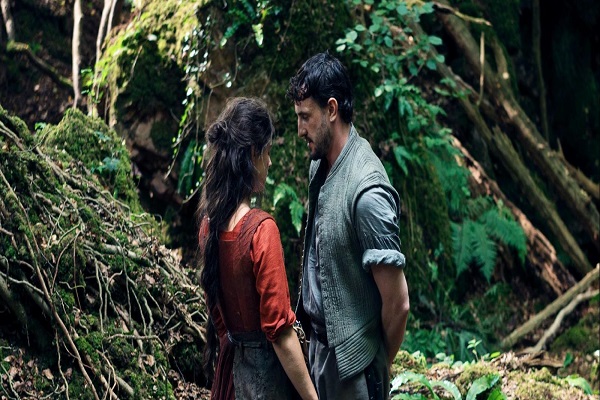
William (Paul Mescal) and Agnes’s (Jessie Buckley) marriage is torn apart by the profound grief after Hamnet’s (Jacobi Jupe) death. William runs his theater company in London and occasionally visits his family in Stratford. His absence at the time of Hamnet’s illness and death makes Agnes heartbroken. She deeply mourns the sad demise of her only son and accuses William of negligence. Emotions are reflected in humans in different ways. Humans react to basic emotions such as love, hatred, happiness, and grief in different ways. Every human being is unique in their own way and reacts to emotions differently. Agnes breaks down completely after Hamnet’s death. But the same grief of William is channelised through his literary creations. William Shakespeare wrote multiple world-renowned plays after Hamnet’s death. There is no doubt that Hamnet’s sad demise affected him profoundly and influenced his later works.
Humans are profoundly impacted by the events in their surroundings. Nothing can be as heartbreaking and devastating as parents losing their child. The tragic demise of William Shakespeare’s son, Hamnet, at the age of eleven must have broken him inside. Quite naturally, this incident must have impacted his later literary works. However, literary critics are divided on whether Hamnet’s death directly influenced Hamlet. The supporting faction argues that Hamnet and Hamlet were used interchangeably during that time period. Shakespeare changed his writing theme from romantic comedy and revenge stories to mostly tragedy after Hamnet’s death. Also, there are multiple counterarguments. After Hamnet’s death, Shakespeare did not write Hamlet immediately. He wrote not only tragic plays like Hamlet but also romantic comedies like As You Like It and Twelfth Night. Also, Hamnet was directly inspired by the old Scandinavian epic Amleth. It can’t be inferred whether Hamnet’s death directly influenced Hamlet. However, there is no doubt that the tragic incident must have affected Shakespeare’s later plays.
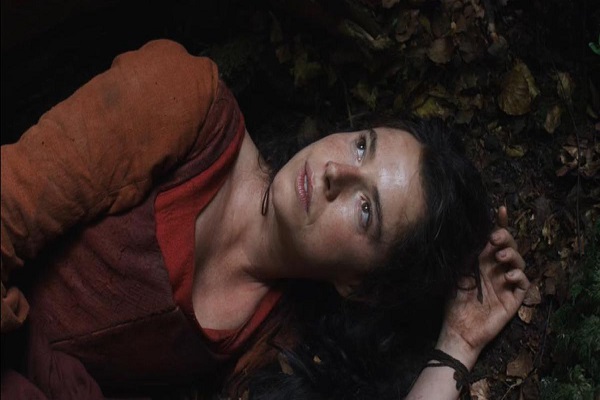
Chloe Zhao directed Hamnet from the heart rather than the mind. Instead of overtly commanding filmmaking, she asked the actors to use their intuitions and emotions while portraying their characters. Chloe Zhao and Maggie O’Farrell’s deeply emotional adapted screenplay based on O’Farrell’s 2020 novel of the same title focuses on William Shakespeare and his wife Anne Hathaway’s early romance, family life, and the profound impact of the tragic, untimely demise of their only son, Hamnet, at the age of eleven, on them, and its influence on William’s immortal play Hamlet. Jessie Buckley as Agnes and Paul Mescal as William Shakespeare have added raw emotions to their characters. Sometimes, their portrayal may look a little over the board or melodramatic; however, it is very difficult to maintain restraint when the characters suffer devastating trauma, such as losing their only son. Child artist Jacobi Jupe’s portrayal of young adolescent Hamnet, especially while passing away, breaks viewers’ hearts.
Lukasz Zal’s cinematography can be divided into two parts. In the first part, his camera captures a free spirit, Agnes, amid an abundance of natural beauty. In the second part, his camera remains mostly static, observing the familial love and tragedy of William and Agnes, being placed close to the characters inside the house. Max Richter’s evocative, minimalistic score resonates with the familial bonding and heartbreaking tragedy of William and Agnes. He uses instruments of the late 16th century and effectively blends the tunes with electronic orchestral music. Richter’s music is gentle and melancholy, but it never sounds melodramatic. Costume designer Malgosia Turzanska portrays the Elizabethan era throughout the film. Malgosia chooses vibrant red and orange colors with organic materials such as bark cloths and linens for Agnes’s costume in happy times. The color of her costume changes to dull gray when she suffers the tragic demise of her only son. William and Agnes’s house was built on a set, and it was designed compactly to reflect the emotional turmoil in the family.