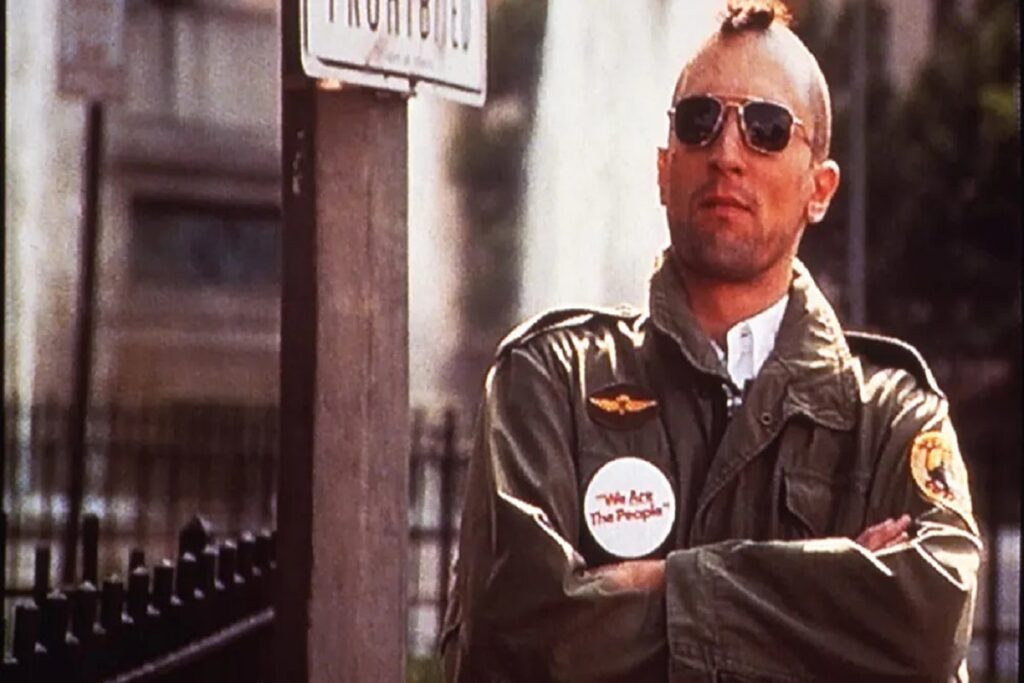
Martin Scorsese’s Taxi Driver is one of the greatest films ever. It has influenced and inspired many films and filmmakers for its creative story and dialogue, innovative cinematography, and evocative music. However, it has also generated controversies since its release. In the film, an allienated ex US marine and Vietnam War veteran, Travis Bickle (Robert De Niro), has been suffering from acute insomnia. While battling insomnia and his mental instability, he drives a yellow taxi on the streets of mid-1970s decaying and nightmarish New York all night. Sometimes, he visits porno theaters for entertainment. New York’s contemporary socioeconomic and political conditions transform him into a ruthless and vengeful vigilante. Is he a noble savior cum hero, or an anti-hero? Or is he a misogynistic, racist, misanthropic, violent, and mentally unstable murderer? Regardless of how viewers interpret him, Travis Bickle remains an immortal and iconic character in cinema history.
Martin Scorsese’s Taxi Driver reflects the socioeconomic & Political situations of mid-1970s America, such as social alienation, political disillusionment, and urban decay. After the US military’s defeat in the Vietnam War, many retired military veterans suffered from Post-Traumatic Stress Disorder (PTSD), resulting in severe depression and alienation. In the film, Travis Bickle also suffered from alienation, mental stress, and acute insomnia. After the US military’s defeat in the Vietnam War and the Watergate Scandal, the US government, political parties, and political establishments had the lowest citizens’ approval and acceptance. People saw politicians with disbelief and cynicism. In Taxi Driver, Presidential candidate Charles Palantine’s speech and political commitments appear fake and fabricated to Travis. He does not believe him and even attempts Palantine’s assassination. Taxi Driver also vividly portrays urban decay. An important metro city such as New York suffered from deindustrialization, unemployment, rampant crime, prostitution, and a drug epidemic. Screenwriter Paul Schrader and director Martin Scorsese capture all these details meticulously in Taxi Driver.
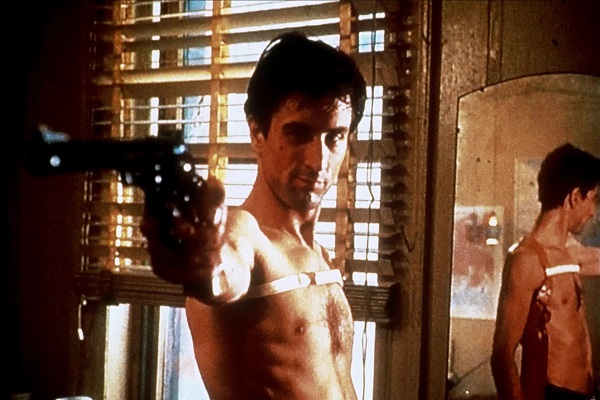
The most crucial question regarding Taxi Driver remains: Is Travis Bickle a noble savior cum hero, or an anti-hero? Or is he just a killer? There is no doubt that the Travis Bickle character is one of the most complex and ambiguous characters in cinema history. He is a former US Marine and a Vietnam War veteran. After he retired from military service, he has been suffering from Post-Traumatic Stress Disorder (PTSD), severe depression, and acute insomnia. He drives a yellow taxi on the decaying and nightmarish streets of New York all night to battle alienation, depression, and insomnia. He also visits porno theaters for entertainment. He becomes so alienated that he sees himself as a different person in the mirror and utters his famous line, “You talkin’ to me?” He falls in love with an attractive female campaign worker, Betsy (Cybill Shepherd), for the US presidential candidate Charles Palantine (Leonard Harris). However, Betsy’s rejection and New York’s pathetic socioeconomic and political conditions gradually transform him into a vigilante. He attempts to kill Charles Palantine and ends up killing a pimp, a customer, and the bouncer of the brothel to save adolescent prostitute Iris (Jodie Foster). His intentions are certainly noble. He wants to eradicate all the scums from New York, and he saves Iris from prostitution. However, his way is dangerous and violent. Charles Palantine is not involved in any illegal activities and does not harm anybody. Therefore, there is no need to kill him. Violence is never an answer to any illegal or unlawful activities. Killing an individual and taking law and order into one’s own hands are never a solution. It is dependent on the viewers’ perspectives to decide whether Travis is a noble savior cum hero, an anti-hero, or a notorious killer.
Many viewers see the ending of Taxi Driver as a dream sequence. In the final sequence, Travis Bickle wakes from a coma and drives his yellow taxi again on the streets of New York. He is not prosecuted for rescuing Iris, and the media hails him as a hero vigilante. Coincidentally, Betsy boards his taxi and praises him for saving Iris’s life. Though screenwriter Paul Schrader and director Martin Scorsese have clarified that the final sequence is real, many viewers believe it is a dream sequence. They believe Travis Bickle dies at the end of the shootout in the brothel. Despite his violent way to eradicate scums from New York, it cannot be denied that he saves Iris’s life. Therefore, the media praise, the acknowledgement letter from Iris’s parents, and Betsy’s admiration for his heroic deeds are meant to fill the void of his physical absence through the dream sequence. However, Travis Bickle remains in people’s hearts forever.
Taxi Driver drew multiple controversies upon its release. MPAA initially gave it an X rating; however, it was revised to R when director Martin Scorsese agreed to desaturate color. The red-colored, blood-stained scenes became muddy brown. Casting a twelve-year-old Jodie Foster as a prostitute drew intense criticism. Therefore, multiple welfare workers and a psychologist were assigned to Jodie Foster, and her elder sister was used as a body double for the intense violent scenes. Critics and viewers objected to the hero vigilante portrayal of Travis Bickle. John Hinckley Jr. attempted to assassinate the then-US President Ronald Reagan, naming Taxi Driver as the inspiration for the assassination attempt, as he was obsessed with Jodie Foster and wanted to impress her.
Screenwriter Paul Schrader portrays his own alienation, depression, and mental stress through Travis Bickle in Taxi Driver. He was hospitalized for gastric ulcer treatment, and amid his intense physical and mental decay, he imagined a taxi driver driving his taxi, as if a yellow coffin were being carried away, through the nightmarish and hellish streets of mid-1970s New York. Schrader’s screenplay was influenced by Fyodor Dostoevsky’s Notes from Underground, Jean-Paul Sartre’s Nausea, and Albert Camus’s The Stranger. The screenplay contains some of the most immortal dialogue in cinema history. After developing a different, alienated personality, Travis watches himself in the mirror and says, “You talkin’ to me?” Having contempt for the current fallen and decaying situation of New York, he writes in his diary, “All the animals come out at night – whores, skunk pussies, buggers, queens, fairies, dopers, junkies, sick, venal. Someday a real rain will come and wash all this scum off the streets.” He also says regarding his loneliness, “Loneliness has followed me my whole life. Everywhere. In bars, in cars, sidewalks, stores, everywhere. There’s no escape. I’m God’s lonely man.”
Taxi Driver features some of the iconic and haunting acting performances in cinema history. With utmost dedication, Robert De Niro portrayed Travis Bickle, an iconic character in cinema history. He lost 15 kg of body weight, researched isolation and mental stress, and drove a taxi for days on the streets of New York to prepare himself for the role. De Niro also guided and helped other co-actors on the set. Cybill Shepherd delivered a stunning, heartfelt, and restrained performance as Betsy, a campaign worker for the US presidential candidate Charles Palantine, and the love interest of Travis Bickle. With utmost courage and professionalism, twelve-year-old Jodie Foster played the prostitute character outstandingly.
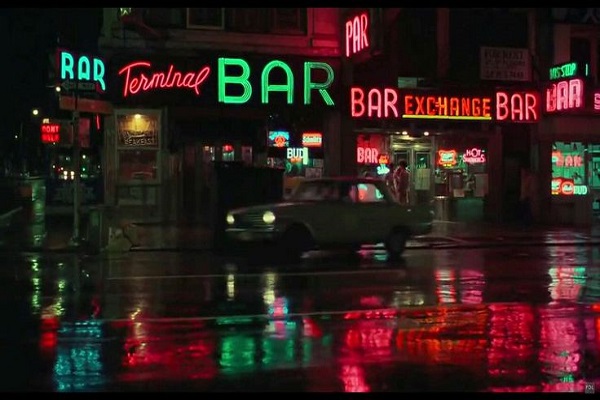
Taxi Driver marks Michael Chapman’s unique and extraordinary cinematography. Chapman placed the camera behind the taxi’s windshield and captured an alienated, mentally stressed, and sleep-deprived Travis Bickle in multiple close-ups. Inspired by French New Wave filmmakers, Chapman captured point-of-view shots featuring Travis through dynamic camera movements. When Betsy rejects Travis on a phone call, the camera shifts to the hotel hallway in advance, and then Travis walks down the hallway. To capture the final shootout via an overhead tracking shot, director Martin Scorsese and cinematographer Michael Chapman had the building’s ceiling drilled out. Cinematographer Chapman created a nightmarish, hellish, haunting, and decaying version of New York using neon lights, heavy smoke, and hazy red, blue, green, and amber colored lights.
Another important phenomenon of Taxi Driver is legendary composer Bernard Herrmann’s timeless, jazz-influenced music. He completed the music hours before passing away on Christmas Eve in 1975. Director Martin Scorsese dedicated the film to him. Tom Scott’s jazzy solo 8-bar saxophone tune depicts Travis Bickle’s alienation, depression, mental stress, and yearning for companionship. Bernard Hermann composed a jazz-influenced symphony orchestra using swooning strings, French horns, trumpets, timpani, bass drums, cymbals, snare drums, harps, clarinets, and contrabassoons. The orchestral music clashes violently with the saxophone melody when Travis’s anger erupts. The music shifts in the opposite direction and becomes rough during the final shootout sequence.