Rarely do filmmakers wait throughout their lives to make a single project. Guillermo del Toro waited for more than fifty years for his dream project, Frankenstein. He is undoubtedly the master of creating humanoid monsters. The monsters portrayed in his films don’t scare the viewers; rather, they make the viewers fall in love with them. A version of del Toro is reflected in the monster’s behavior. Therefore, he converts Mary Shelley’s gothic horror novel Frankenstein into his version of a gothic romantic film of the same title. He shows that an abandoned child in the form of a monster does not take shelter in hostility and violence, but embraces forgiveness and love. He questions whether science can defy God and the rule of this world. In Frankenstein, del Toro vividly shows what it is to be a true human being.
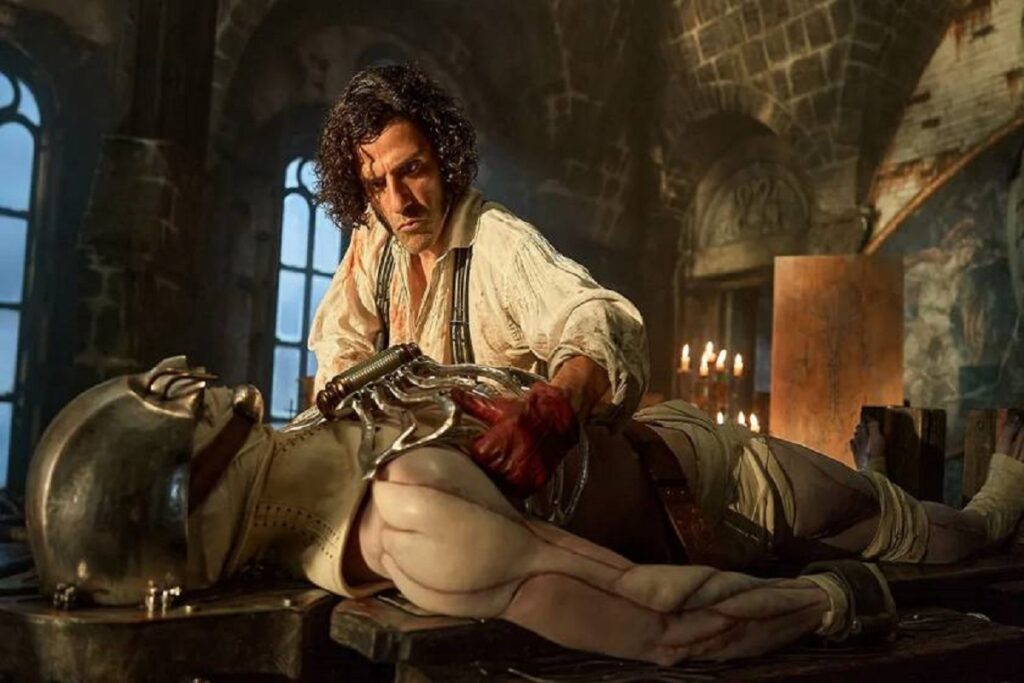
In Frankenstein, filmmaker Guillermo del Toro highlights the importance of parental responsibility. He shows how the cycle of abuse, ill-treatment, and the immense pressure of high expectations continues across generations. Victor (Oscar Isaac) was subjected to his father’s cruelty during childhood. When he creates the creature (Jacob Elordi) from corpses, Victor behaves with the creature in the same way as his father did with him. He is frustrated at the creature’s slow intellectual growth and attempts to destroy it. Guillermo del Toro depicts the pain of abandonment of the innocent creature. He is neglected by his creator or father, leaving him searching for his identity. This tremendous pain of abandonment and cruelty makes it violent sometimes. However, the creature forgives Victor in the end.
Frankenstein raises an important question: can science defy God and God’s creations? How far can science go? Victor Frankenstein becomes a skilled surgeon and experiments with the body parts of corpses. He creates a monster or creature by assembling body parts of the dead bodies of criminals and soldiers who died in war. However, the creature attacks Victor when he abandons him because of his slow intellectual growth. He deems this a failed experiment and attempts to destroy him by setting the laboratory on fire. Therefore, this scenario appears as the creature going out of control of the creator or a son going out of control of his father. Birth, death, and nature are God’s creations that maintain the rule of nature or the equilibrium of this world. If that is broken, humans have to pay the price for these irresponsible acts.
Through Frankenstein, Guillermo del Toro asks the most important question: Who is the real monster, Victor or the creature? Victor creates the creature but abandons him as he does not turn out to be his desired version. Victor does not think twice before he attempts to destroy the creature. Not all children become the desired or dreamt version of their parents. But can parents avoid their responsibilities for their children who don’t develop enough talent or intellectual capabilities? If they continue to do so, this world will be a living hell. It is true that the creature searches for his identity and attacks Victor at the North Pole. However, he finally forgives Victor. The creature develops and exhibits more humanistic qualities than Victor.
Even though Mary Shelley’s novel Frankenstein or The Modern Prometheus deals with vengeance and horror, Guillermo del Toro’s film Frankenstein deals with forgiveness and redemption. Dying Victor asks the creature’s forgiveness for abandoning him and attempting to destroy him. The creature does not embrace vengeance and forgives his creator and father, Victor. He no longer holds the grudge as he has made peace with life. Instead of separation, he follows the path of reconciliation and redemption.
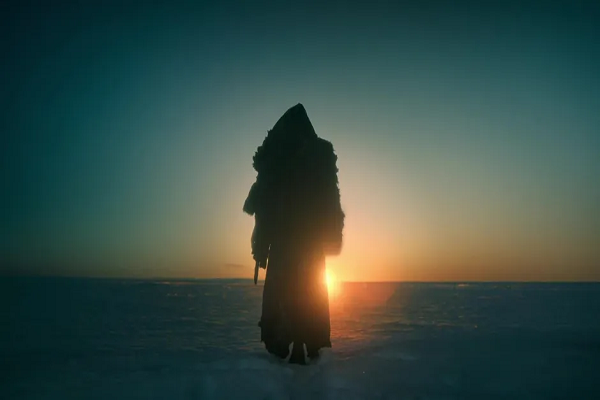
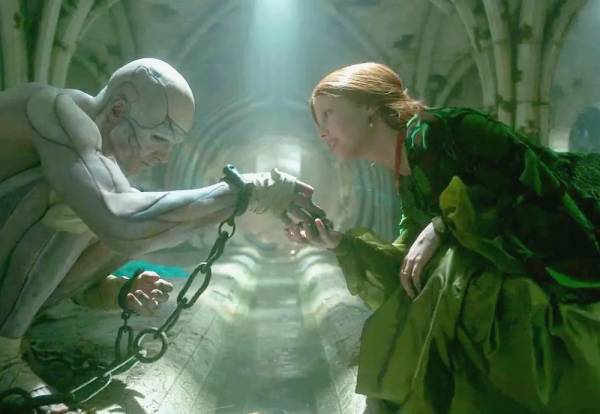
Though Guillermo del Toro’s adapted screenplay is based on Mary Shelley’s original novel titled Frankenstein or The Modern Prometheus, del Toro shifts the theme of the film from horror to tragedy. He transforms the story of an egotistical scientist into a story of the relationship between an irresponsible father and an abandoned child. In del Toro’s film, the creature is not vengeful; rather, it looks humane on multiple occasions and shows vengeance only in self-defence. Guillermo del Toro’s persona is reflected in the creature’s behavior. Therefore, the creature is more sympathetic than a revengeful monster. Finally, the creature forgives his creator or father, comes to terms with life, and embraces a renewed life in the bright sunlight, exhibiting hope and optimism. Jacob Elordi portrays the creature’s abandonment, helplessness, vulnerability, longing, and loneliness incredibly. The creature looks more like a human than a monster. Oscar Isaac’s portrayal of Victor is not just an egotistical surgeon, but also a mad inventor and, in the end, a repentant father. Mia Goth portrays Elizabeth with both sympathy for the creature and restraint with Victor.
Frankenstein features Dan Laustsen’s utterly dynamic, magnificent cinematography. Dan uses mostly wide-angle lenses even for close-ups to make the shots look deep, sharp, and immersive. He also uses a single light source and multiple low-angle shots, which make the film look like a larger-than-life epic. In Frankenstein, del Toro brilliantly uses colors to signify events and characters in the film. Victor’s passion, violence, and memories of his mother are represented in red. Elizabeth’s sympathy for the creature is represented in green. Harlender and William are represented in blue, and the reconciliation between Victor and the creature is represented in white.
Aeandre Desplat’s melancholy orchestral background score touches hearts. As del Toro has shifted the film’s theme from gothic horror to gothic romance and pathos, Alexandre has also shifted the music’s theme from horror to romance. The Norwegian violinist Eldbjorg Hemsing’s solo violin resonates with the creature’s pathos. Del Toro prioritizes physical sets over VFX. Therefore, massive sets were built for making the film. Victor’s laboratory was built on a set. A 130-foot-long ship was built and mounted on a gimbal to create the internal movements. Make-up and costumes used in the film reflect the Victorian Era of the mid-19th century. The intense prosthetic makeup on the creature portrays the creature as more of a human being than a monster. Frankenstein received worldwide critical acclaim for the makeup and costumes.