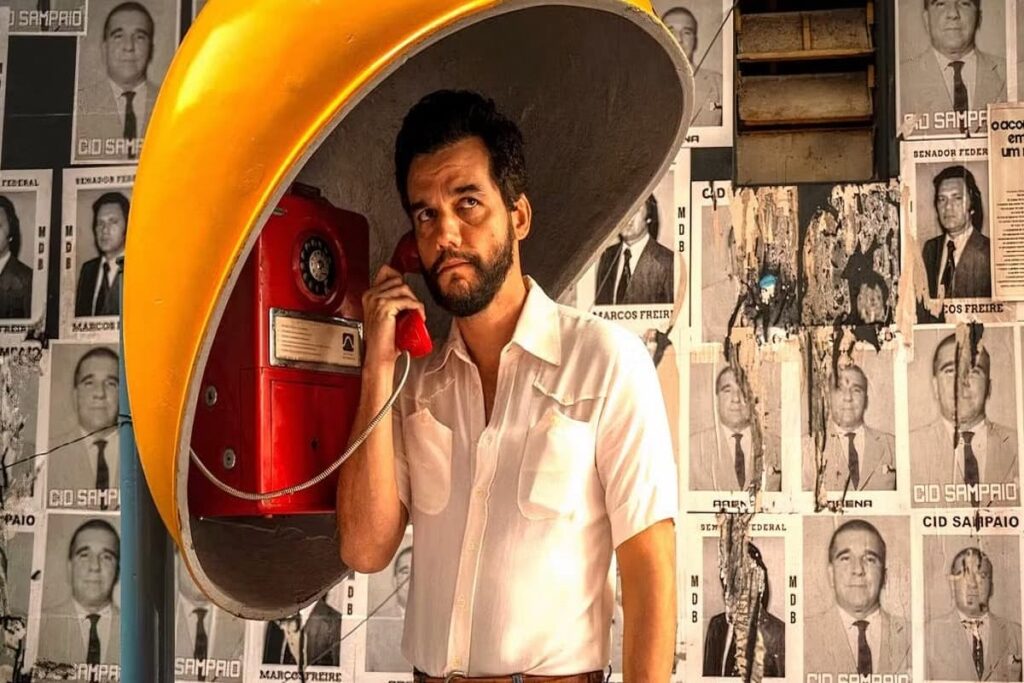
Kleber Mendonca Filho’s historical, political, and neo-noir crime thriller The Secret Agent is an incredibly important film. Director Kleber portrays the tumultuous time period of Brazil under the infamous military dictatorship that ruled Brazil brutally from 1964 to 1985. When ordinary citizens lose freedom, there is no limit to their indescribable suffering. Living life at every moment appears to be a challenge. Citizens have no other way but to accept the most vulnerable lives. All the influential segments act in close complicity with the dictator. A common citizen’s life has no value. The Secret Agent shows how a young, bright, enthusiastic researcher is targeted, persecuted, and eliminated by a dishonest industrialist in association with a corrupt state-sponsored authoritarian mechanism.
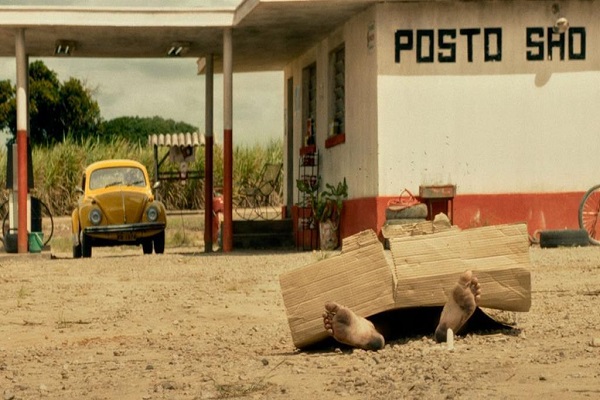
A Young, bright, and enthusiastic researcher, Armando (Wagner Moura), is on the run after a major fallout with a dishonest businessman, Henrique Ghirotti (Luciano Chirolli), who stole his electric car battery patent and stopped government funding in his project. When Armando protested strongly, Ghirotti persecuted him with the help of corrupt government and police officials. En route to Recife during the carnival time in 1977, Armando stops at a gas station where he sees a fly-strewn, dead body covered by a sheet of cardboard lying on the ground. Scattered dead bodies here and there show the law and order situation of Brazil under the control of the infamous military dictatorship. Police officials arrive and take a packet of cigarettes from Armando as a bribe. However, the lying dead body on the ground does not attract any sympathy from them.
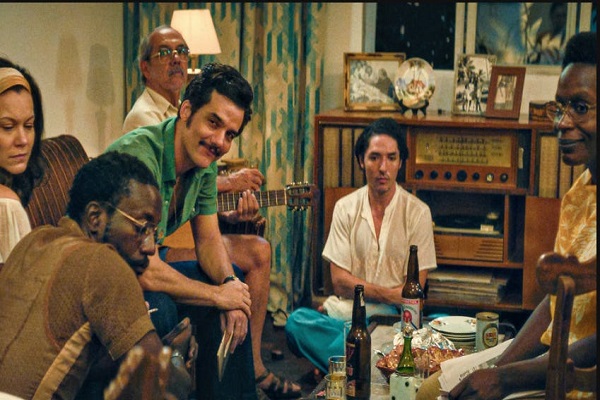
As Armando’s wife, Fatima (Alice Carvalho), is no more, his son Fernando lives with his in-laws in Recife, where Armando’s father-in-law, Alexandre (Carlos Francisco), works as a projectionist at Cinema Sao Luiz. Armando takes shelter in the hideout of former anarcho-communist Dona Sebastiana (Tania Maria), where he is introduced to other dissidents, Claudia (Hermila Guedes) and Haroldo, and Angolan refugees, Thereza Vitoria and Antonio. They help him get a job at the local identity card office, disguised under his new name, Marcelo. Armando meets the resistance leader, Elza (Maria Fernanda Candido), at Cinema Sao Luiz and recounts the harrowing tale of his persecution. A severed leg is found inside a shark. Corrupt police official Euclides (Roberio Diogenes) and his sons Sergio and Arlindo are called to the scientific lab where the shark has been dissected. News agencies publish a hairy leg story as a metaphor to describe the military government’s brutal persecution and massacre of dissidents. Elza informs Armando that there is a threat to his life, and Ghirotti might have arranged some contract killers. Ghirotti indeed appoints two contract killers, Augusto and his stepson, Bobbi, who appoint an impoverished hitman, Vilmar, who tracks down Armando inside the identity card office. Armando attempts to flee Recife. However, he can’t escape an entire state mechanism that chases him throughout the day and night. In the present day, a young student researcher, Flavia, discovers through newspaper archives and audio tapes that Armando was murdered.
The world remembers the brutal atrocities committed by Brazil’s military dictatorship. There were human rights abuses in every nook and corner. Dissidents and political prisoners were subjected to inhuman tortures like incessant beatings, electric shocks, and starvation. They were also subjected to intense psychological torture to break their morale. Fake executions would be carried out in front of family members. The intense torture of pregnant women often resulted in miscarriages. Labor unions were dismantled. Basic human dignities were denied. Thousands of political opponents, including tribals and native Brazilians, were killed, and the numbers were never published officially. Numerous mass graves, such as Dom Bosco, were found all over Brazil. Filmmaker Kleber Mendonca Filho shows just a glimpse of all those inhuman atrocities of Brazil’s military dictatorship in his political neo-noir crime thriller The Secret Agent.
Kleber Mendonca Filho’s honest, authentic, unflinching, and incredibly detailed screenplay unfolds the events slowly, but it vividly shows some glimpses of the paranoia created by Brazil’s ruthless military dictatorship. Viewers worldwide can get a sense of the brutal torture and atrocities committed by the authoritarian military regime and its affiliates on the dissidents and innocent civilians. The archived newspaper footage and audio tapes used in the film establish the facts. The characters in The Secret Agent, portrayed by an ensemble cast, appear to be real citizens of 1970s Brazil under a military dictatorship. The actors deliver spontaneous, realistic, and natural performances, without being melodramatic. Wagmer Moura’s calm, composed, and restrained acting, using melancholy gazes and tensed facial expressions, reminds the viewers of the helplessness and vulnerabilities of the countless persecuted dissidents of Brazil during the authoritarian military regime.
One of the major achievements of The Secret Agent is the creation of almost a replica of 1970’s Brazil. Cinematographer Evgenia Alexandrova used a modern Arri Alexa 35 camera, vintage Panavision anamorphic lenses, high saturated colors, and warm tones to create 1970’s Brazil. She used numerous dolly shots to establish the characters against the surroundings. Therefore, the characters in the film appear to be incredibly real and believable. Multiple split-diopter shots add thrilling effects and make the film appear interesting. Music directors Tomaz Alves Souza and Mateus Alves brilliantly blended original score, 1970s Brazilian classics, and 1970s internal hits such as Chicago’s “If You Leave Me Now” and Donna Summer’s Love to Love You Baby”. The original soundtracks evoke both paranoia and melancholia. On the other hand, 1970s Brazilian classics and international hits are juxtaposed with the contemporary panic-stricken environment.