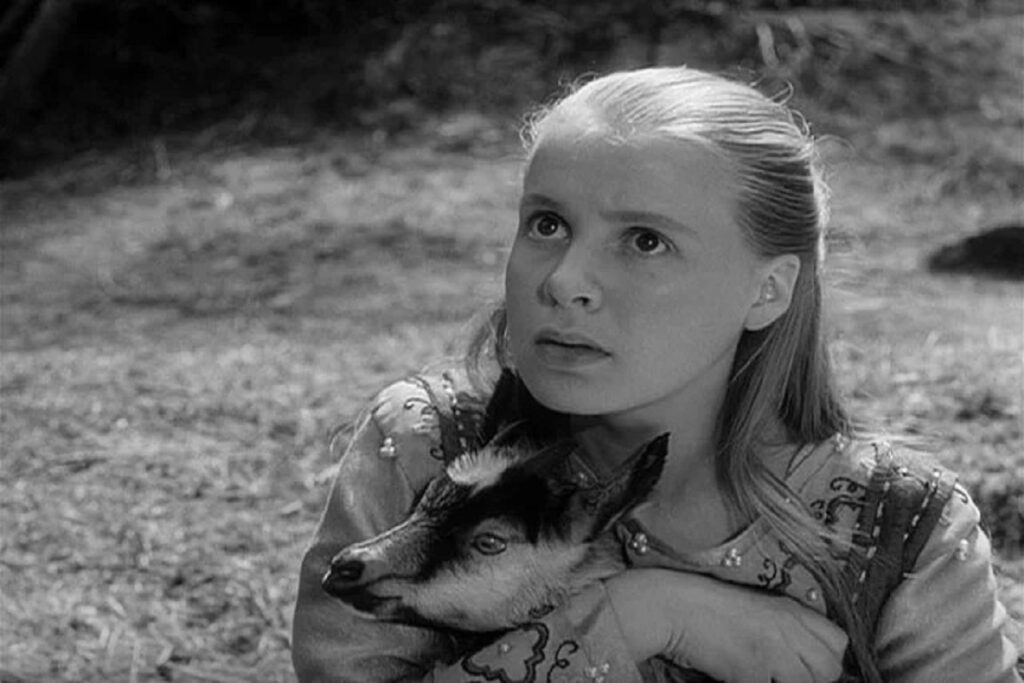
Ingmar Bergman is revered as one of the most important filmmakers in the history of cinema. He portrayed multiple complex psychological, spiritual, and existential issues in his films throughout his life. His films often deal with the suffering of ordinary humans and their existential crises. He questions ‘the silence of God’ in multiple films. In The Virgin Spring, a luminous, innocent maiden (Birgitta Pattersson) is brutally raped and murdered by two goat herders on the way while taking the candles to the church on the day of Good Friday. Coincidentally, the goat herders, along with a minor boy, take shelter in the girl’s house and attempt to sell her blood-stained clothes to her mother. In a rage, her father (Max Von Sydow) murders all three goat herders, including the minor boy. This film is not a simple revenge story of a bereaved father who loses her only child to heinous criminals. In The Virgin Spring, Bergman questions ‘the silence of God’ and shows how a pious, devout Christian father turns into a vengeful, violent murderer when his only child is brutally raped and murdered. In this film, Bergman illustrates the principles of Paganism and Christianity, as well as the contrasts between them.
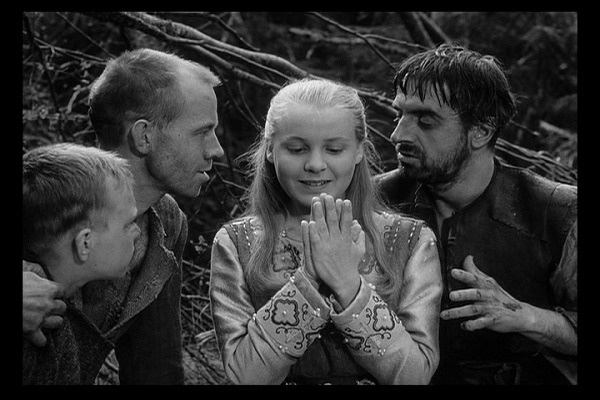
The most tragic and terrifying aspect of The Virgin Spring is the loss of innocence. On her way to the church, Karin offers food to the heardsmen, but in return, they brutally rape and murder her. That’s how the scoundrels repay her good deeds. Nothing can be more heartbreaking than this. Just before the horrendous rape and murder, Karin loses her innocence, gets a terrible sense of this brutal world, and pays the price for her innocence and nobility in the most traumatic way possible on this earth.
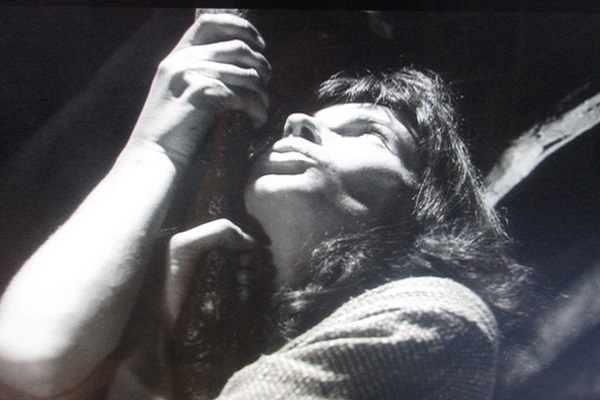
The screenplay of The Virgin Spring, written by Ulla Isaksson, is partially based on a 13th-century ballad titled Tore’s Daughters in Vange. The film is set in the 13th century, when Sweden was slowly transitioning from Paganism to Christianity. Therefore, the principles of both Paganism and Christianity and the contrasts between them are reflected in The Virgin Spring. Pagans worship natural elements such as air, water, fire, and earth. They follow polytheism and worship multiple gods. They live in a deep-rooted coexistence with nature. Instead of stringent rules, they follow personal observations and principles. Per Tore’s servant, Ingeri (Gunnel Lindblom), worships the Norse God Odin. Viewers can see an old Odin-like one-eyed bridge-keeper who tells Ingeri that he does not have a name these days, and then he makes sexual advances toward her. Fire, water, and earth are largely present in the film. In the first scene, Ingeri fires wood in the morning. There is a beautiful stream in the middle of the forest. When Per Tore lifts Karin’s head, a spring emerges from the earth. Also, Per Tore turns vengeful after the brutal rape and murder of his daughter and only child, Karin. Therefore, The Virgin Spring features numerous Pagan references.
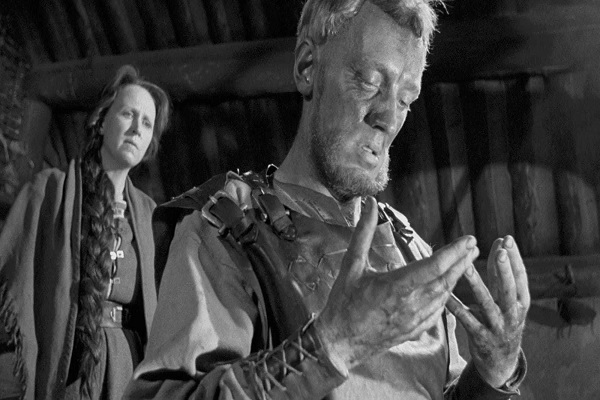
The Virgin Spring also features the principles of Christianity. Ingmar Bergman juxtaposes both Paganism and Christianity in the film and shows the impact of both on common Swedish people in the 13th century. Karin and her family show love, compassion, and nobility to the herdsmen. Karin offers them food, and her parents provide them with shelter and food on the freezing winter night. After killing the young boy, Per Tore asks for God’s forgiveness. His wife, Mareta (Birgitta Valberg), even tries to restrain her husband from killing the boy and shows her sympathy when her husband kills him. Per Tore repents for his Sin and promises to build a Church as a penance at the spot where Karin was brutally raped and murdered. He also questions beloved Lord Jesus Christ, why God has allowed both crimes to happen. Had the goat herders not committed the heinous crime, he wouldn’t have killed the young boy. In the end, a mystical spring emerges from the earth, and Ingeri washes herself with the spring water. She cleanses herself from her sin of jealousy toward Karin.