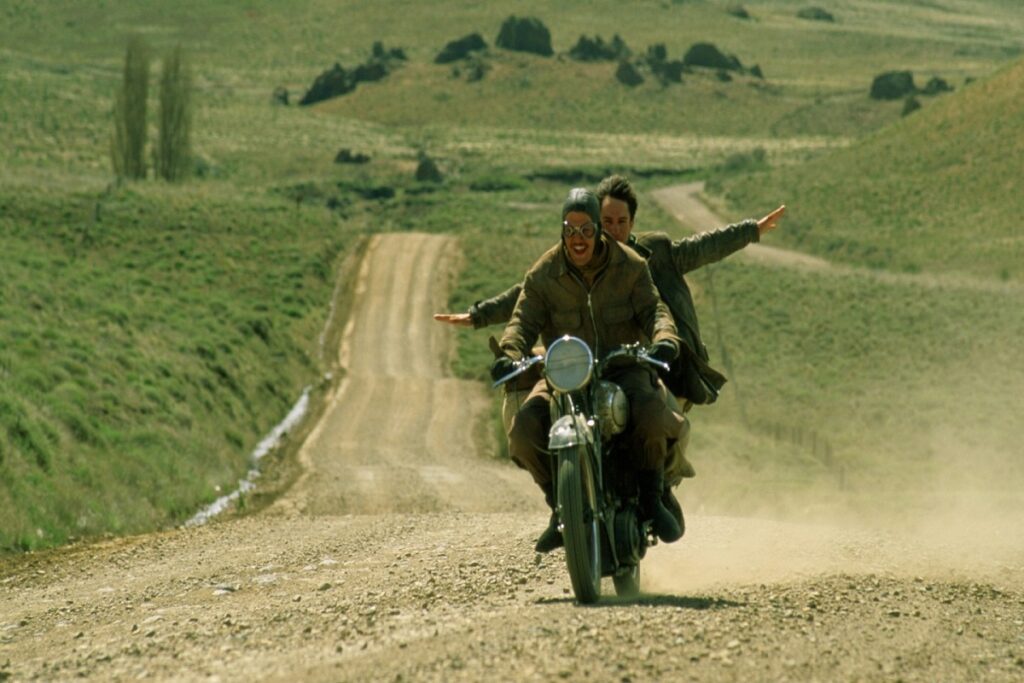
Che Guevara is one of the most renowned revolutionaries of the 20th century. Countless t-shirts all over the world pay tribute to his immortal existence every day. Innumerable articles have been written about his activities and political ideologies. Walter Salles’s film The Motorcycle Diaries shows not exactly the revolutionary Che Guevara, but the awakening of his revolutionary spirit. Guevara and his biochemist friend Alberto Granado started their great Latin American trip riding Granado’s motorcycle on 4th January 1952. The primary objective of the trip was fun and adventure. However, they ended up witnessing the poverty and miseries of the ordinary Latin American people during the trip. The experience of this trip converted an introvert Argentinian medical student, Ernesto, into one of the most famous revolutionaries and renowned faces of the 20th century, Che Guevara. His revolutionary spirit and ideologies have inspired countless ordinary civilians not only in Latin America but all over the world. Che continues to exist in people’s hearts and freedom movements across the world.
Twenty-three-year-old Ernesto (Gael Garcia Bernal) and twenty-nine-year-old Alberto Granado (Rodrigo de la Serna) start their great Latin American trip riding Granado’s 1939 Norton 500 motorcycle on 4th January 1952. The planned route of the trip starts from Buenos Aires and then continues from the Andes Mountains to Chile, the Atacama Desert to Peru, Peru to Colombia, and Colombia to Venezuela. Ernesto and Alberto want to spend a few weeks in San Pablo Leper Colony in Peru and end the trip in Caracas, Venezuela, before Alberto’s 30th birthday on 4th April. Even though Ernesto postpones his last semester of his medical course for this trip, his family supports him wholeheartedly, and his father gives him a gun for any adversaries. They first stop at Miramar. Ernesto meets his wealthy girlfriend Chichina (Mia Maestro) on her posh estate and gives her a puppy. She is not happy with him for seeing her after a long time and declines sex. However, she pays fifteen American dollars to Ernesto to buy her a bathing suit. Despite multiple attempts from Alberto, Ernesto refuses to give him the money. They pass through the Andes Mountains and reach Chile, where their bike breaks down. Ernesto and Alberto get newspaper coverage for their mission of treating leprosy patients. Seeing this coverage, a mechanic agrees to repair their bike. However, they are compelled to leave the town hastily when Ernesto has a fallout with the mechanic’s wife at a local nightclub. Finally, they sell the motorcycle and continue their journey on foot.
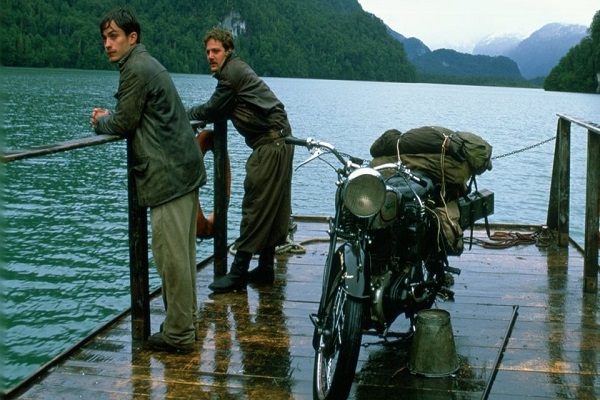
In Chile, Ernesto and Alberto experience the punishing poverty of the ordinary Latin American people for the first time. Landowners have ousted the tenant farmers, and the capitalists are exploiting the indigenous people. A couple has been persecuted for their communist ideologies. They don’t even have a blanket to cover themselves during wintry nights in the Atacama Desert. A mine owner does not even provide basic necessities like water to the downtrodden mine workers. Ernesto gets agitated and revolts against the mine owner by throwing a stone at his car. This small act of rebellion makes the premise of a great revolutionary.
Crossing the Atacama Desert, Ernesto and Alberto reach Peru. They are elated to see the mesmerizing beauty of the ancient civilization of Machu Picchu. However, they compare it with the Peruvian capital Lima and detest its artificiality. When they reach San Pablo Leper Colony in Peru, Ernesto is pained to see the differential treatment of the leprosy patients. The doctors and nurses stay on the northern side of the Amazon riverbank, but the patients are on the southern side. Even though nurses instruct Ernesto to wear gloves while treating patients, he declines to do so as he believes that leprosy is not contagious. Ernesto takes special care of a young female nurse, Sylvia. Ernesto and Alberto play football with the patients, but they are denied food, as they did not attend Mass. On his 24th birthday, Ernesto delivers a heartwarming speech in which he speaks about the “Unification of Latin America”. Then, he swims across the Amazon River and spends the night with the patients in the colony. They gift Ernesto and Alberto a raft named “Mambo Tambo” on which they start sailing through the river across Colombia to Venezuela.
Che Guevara is one of the most renowned revolutionaries in the world. Countless t-shirts mark his influence all over the world even today. Many regard him as a hero, and his revolutionary spirit inspires across generations all over the world. However, his life has not been without controversies. Many experts accuse him of eliminating his political opponents ruthlessly in cold blood. Even though he was hailed as a great guerrilla leader, he was captured and executed in Bolivia. He could not save his downfall. Che was born in an upper-class family in Rosario, Argentina. Young Che had been an acute Asthmatic since he was two years old. However, this did not stop young Che from becoming a voracious reader. He played multiple sports during his school days, and he was a club-level rugby player. During his medical studies, he, along with his biochemist friend Alberto Granado, had a continental trip across Latin America from Argentina to Venezuela, crossing Chile, Peru, and Colombia. He became aware of the punishing poverty of the Latin American people, which converted him from an introverted medical student into a world-renowned revolutionary.
After his continental Latin American Trip, Che completed his medical studies in 1953 and went to Guatemala to support Jacobo Arbenz’s socialist government. However, he had to flee to Mexico when the U.S.-backed overthrew Jacobo Arbenz’s socialist government. In Mexico, Antonio Lopez introduced him to Fidel and Raúl Castro and gave him his famous nickname “Che” (English: “hey”) as he would frequently use this term during conversations. Che joined the 26 July Movement and strongly supported Fidel and Raúl Castro for the Cuban Revolution. They captured Cuba and ousted military dictator Batista. Che became the industry minister, the chief of Cuba’s National Bank, and also the finance minister. However, Che was accused of summary executions of the captured soldiers and his political opponents. He was not successful in maintaining his multiple state responsibilities to run Cuba. Fidel Castro sent him to multiple countries as a diplomat. As a staunch believer in armed revolution, Che went to the Republic of Congo and Bolivia but failed miserably. On the fateful day of 9th October 1957, Che was executed in Bolivia, leaving behind a great revolutionary legacy, multiple controversies, and numerous political debates.
In The Motorcycle Diaries, director Walter Salles has created a Latin American Epic. This film is his ‘love letter’ or homage to Latin America and its people. It is not simply a road movie. Salles and his crew followed the route of the original trip and visited all the places that Che and Granado visited. They also shot the film in sequence, like the original trip, and mostly like a documentary, which inspired countless tourists and tour operators to plan Latin American trips following the same route. The most valuable but heartbreaking lesson that Director Salles learnt from the experience of making this film is that Latin America has not changed even after more than fifty years. Spanish invaders destroyed the refined ancient civilization of Machu Picchu. However, Director Salles and his cast and crew got profoundly moved and transformed while making this film. Salles used mostly Latin American cast and crew in this film, and it worked without any romantic or action-packed storylines. Salles himself stated later that watching this film is like getting wet in gentle rain without knowing how.
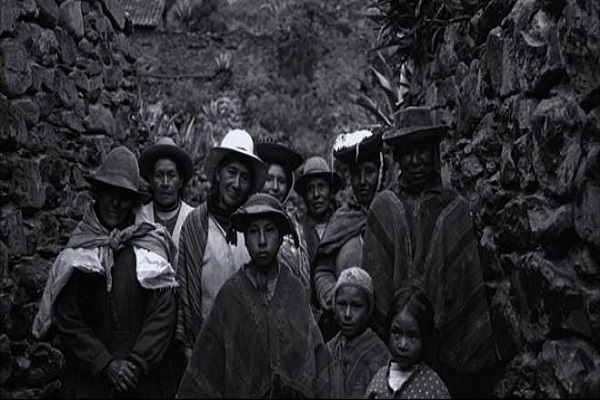
Salles also portrays spirituality in Che’s character. Before the production of this film, Salles and his team visited Alberto Granado in Havana, and they interviewed him for ten hours. During the interview, Salles asked him how it would look if young Che were to be re-baptized. Granado replied that it would be like crossing the Amazon River. Salles used this spiritual idea in the film wherein Bernal swam across the Amazon River from the North side of the San Pablo Leper Colony to the South side. This incident shows the dynamic shift of Che’s ideology from the upper to the lower section of society, for which he sacrificed the rest of his life. Spanish invaders came from the Northern side and invaded South America. In the film, Salles brilliantly uses the transfixed moments of the indigenous people who directly look at the camera, breaking the fourth wall.
Jose Rivera’s adapted screenplay, based on The Motorcycle Diaries by Che Guevara and Che Guevara: The Making of a Revolutionary by Alberto Granado, incredibly captures the two separate aspects of the film. The first half focuses on the fun and excitement of the trip, but the second part of the film shows the shift in Che’s ideology, which made him one of the greatest revolutionaries ever in the world. Rivera commented about the story, “Each generation needs a story about what it is to be transformed by geography, what it is to be transformed by encounters with cultures and people that are alien from yourself”. Actor Gael Garcia Bernal put in humongous efforts to portray Che Guevara. He prepared himself intensely for six months by reading numerous articles and books on Che Guevara. He also read the works of Karl Marx, José Martí, and Pablo Neruda. Bernal met Alberto Granado in Havana and asked him every minute detail. His charisma enriches his portrayal of Che Guevara on the screen. Bernal, a Mexican, used an Argentine accent while delivering his dialogues. He also swam across the Amazon River to film the last scene of the film, which was shot over three nights. Rodrigo de la Serna, who is also related to Che Guevara from his maternal side, was selected from more than a thousand actors who auditioned for the role. He brilliantly portrays Granado’s lively character, adding fun and joy.
Eric Gautier’s camera captured the breathtaking ethereal beauty of South America. Gautier used mostly natural night and wide-angle lenses to cover the sublime landscapes. Two motorcycle riders set against the enormous natural beauty in the background show viewers how trivial we are in comparison to the magical beauty of nature. This film and the cinematography have beckoned countless viewers over the years. Many of them even ended up completing their South American continental trips following the same route as Che and Granado did. Gautier’s camera captures the friendship and intimate moments between Che and Alberto. Gautier’s incredible close-ups show the miseries and vulnerabilities of helpless peasants, evicted communists, and innocent indigenous people. The transfixed on-screen moments of the indigenous people who break the fourth wall by directly looking at the camera move the viewers. Gustavo Santaolalla’s Latin America-influenced music, which includes Flamenco-style Guitar and jazz-inspired original soundtracks, is both fun-filled and melancholy. While some tracks have a rock touch, others are filled with melancholy orchestral music. The soundtracks also contain the flavor of a road movie, especially during the first half.
Film analysis and review on YouTube by Mainak Misra