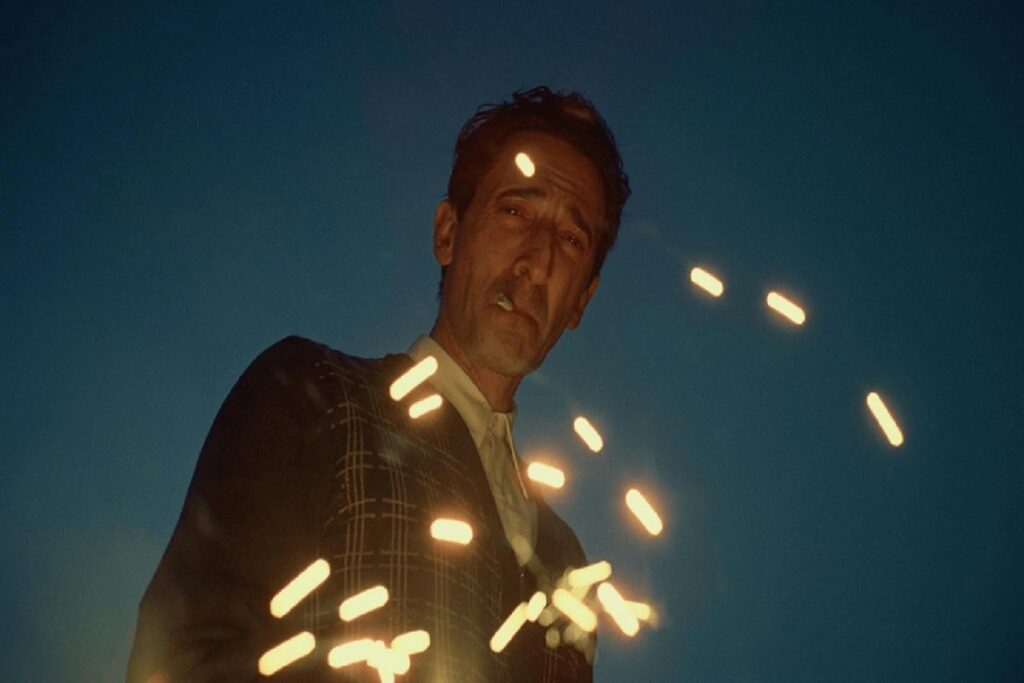
There are very few films based on architecture as a theme. Brady Corbet’s latest film, The Brutalist, is a precious addition to those films. It deals with the brutalist architecture type that gained momentum and recognition after World War II. A Bauhaus-trained Hungarian Jewish architect and Holocaust-survivor named Laszlo (Adrien Brody) is forced to leave his motherland in 1947 after World War II. The architect emigrates to the United States with the hope and vision for a better future and life. However, when he lands there, he is tormented by the ill-treatment and discrimination. The liberal American society allows him to live there with his family, but does not accept him wholeheartedly. The American dream appears to him like an illusion.
Director Brady Corbet’s uncle and screenwriter Mona Fastvold’s grandfather have worked as architects. Therefore, they have always been passionate about architecture and wanted to make a film based on it. One of the most renowned types of architecture is Brutalist architecture, which gained popularity after World War II. This architectural type is cost-effective, made with raw, unfinished materials such as concrete, and focuses on structure and functionality over decoration, like modern architectural designs. However, many multi-story buildings, including government buildings, schools, colleges, and community centres, were made in a brutalist architectural style. It was deemed anti-bourgeois and an architecture for ordinary citizens due to its cost-effectiveness, usage of raw concrete, and ordinary look. As the world recovered from the damage caused by World War II, this architectural style gained popularity worldwide, especially in communist and socialist countries.
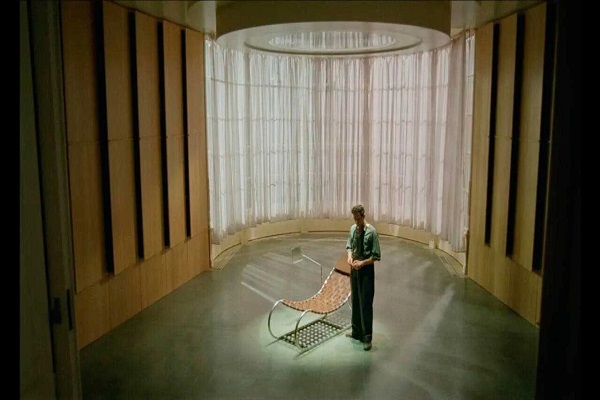
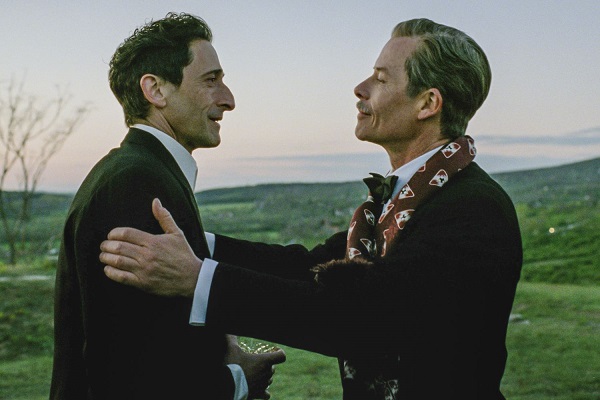
Unfortunately, an expensive art like architecture needs a patron to survive and thrive. Therefore, many architects become slaves of capitalists. Often, they are compelled to work in a hostile and whimsical environment. In The Brutalist, Laszlo gets Harrison Lee Van Buren (Guy Pearce) as a patron. However, Laszlo suffers multiple times because of Harrison. Attila (Alessandro Nivola) and Laszlo are denied reimbursement for the expenses incurred in setting up a new library. Harrison pays the bill much later. When the goods train carrying the raw materials for building the new community centre gets derailed, Harrison suddenly abandons the project. Even though Laszlo works wholeheartedly, his success ultimately depends on Harrison’s whim. In Carrara, Italy, Harrison rapes an intoxicated Laszlo. Nothing can be more disgusting and painful than this.
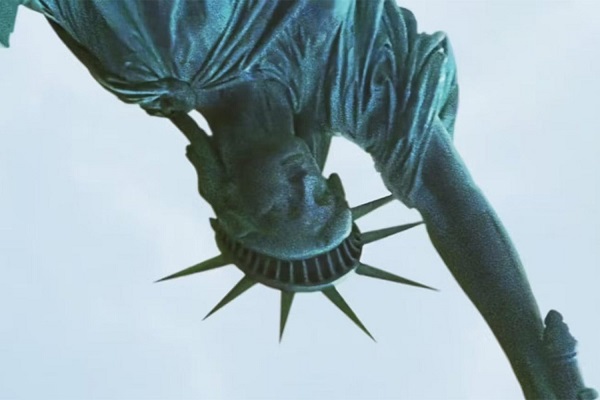
When Laszlo reaches New York City, viewers see The Statue of Liberty upside down. He immigrates to the United States with his eyes full of dreams and aspirations for a bright future. He manages to bag a few assignments as well. However, he never receives a heartfelt welcome. He is insulted, raped, and reminded of his non-American Jewish roots. He is so cornered that he decides to leave New York and settle down in Israel. Director Brady Corbet represents Laszlo’s vulnerability in the United States through the upside-down Statue of Liberty and the holy Cross.
Brady Corbet’s uncle and Mona Fastvold’s grandfather have worked as architects. Therefore, they have been passionate about architecture and made this film based on architecture. Their 170-page screenplay is incredibly detailed. It illustrates everything so minutely that filming became easy with only one or two setups. Although Laszlo’s character is fictional, it is based on multiple real-life architects, including Marcel Breuer, Paul Rudolph, Ludwig Mies van der Rohe, and Louis Kahn. The Screenplay vividly depicts multiple layers of Laszlo’s life, including his struggle as an immigrant and passion as an architect.
Brady Corbet’s The Brutalist is an incredibly well-made film. Adrien Brody was chosen to play Laszlo’s character due to his outstanding acting and Hungarian Jewish family history. Viewers can’t think of any other actor to portray Laszlo’s character because of his outstanding portrayal of the character. Felicity Jones as Erzsebet has done a pretty decent job. Guy Pearce has portrayed the negative character of Harrison effortlessly, resulting in a lasting impact on the viewers’ minds.
Director Brady Corbet and cinematographer Lol Crawley decided to shoot The Brutalist on 35mm VistaVision format. Paramount Pictures developed the VistaVision format in the 1950s, but it was used only for seven years before becoming obsolete. In the VistaVision format, 35mm films are placed horizontally to produce a grain-refined wider view of the field. Corbet and Crawley have utilised this format to achieve wider and natural images of the architectural designs on the screen without distortion. They have extracted 70 mm prints for projection. Natural light was used throughout the film. Few scenes were filmed digitally. The epilogue was shot on a digital Beta Cam. The goods train derailment scene was shot digitally, and then the grain was added to give it a vintage look. The scene on the ship in front of the Statue of Liberty was filmed on a Handycam. The scene in which Erzsebet accuses Harrison of raping Laszlo was shot with the combination of a handheld camera and a steadycam in a long take. The brutalist is filled with multiple long takes and breathtaking naturalistic images.
Editor David Jancso brilliantly connects long takes and static shots with sudden dynamic shots to create a sense of panic and depict Laszlo’s unstable and tense new life in the United States. David had prior experience working on celluloid, which immensely benefited director Corbet and cinematographer Lol Crawley in pulling off the film.
Director Brady Corbet has known young British composer Daniel Blumberg for over a decade. The Brutalist is dedicated to legendary avant-garde classical composer Scott Walker, with whom Brady Corbet had a long association. There are multiple similarities between the music styles and writing of Scott Walker and Daniel Blumberg. He used open piano pieces, trumpet, trombone, tuba, saxophone, and multiple other instruments to compose the architecture-themed soundtracks of The Brutalist. There is continuous music for the first ten minutes. Blumberg’s soundtracks also resonate with Laszlo’s life and struggle as an immigrant in the United States.
One of the most important aspects of The Brutalist is Judy Becker’s production design. She has been passionate about Brutalist architectural design for a long time. Therefore, this project was her labor of love despite the low budget. The biggest challenge was that she had to build 1950s Philadelphia and Pennsylvania in Budapest. Laszlo’s trauma in the Dachau concentration camp deeply inspired his architectural designs. Therefore, Judy had to conduct extensive research on the architectural designs of both the Brutalist architecture type and multiple concentration camps.