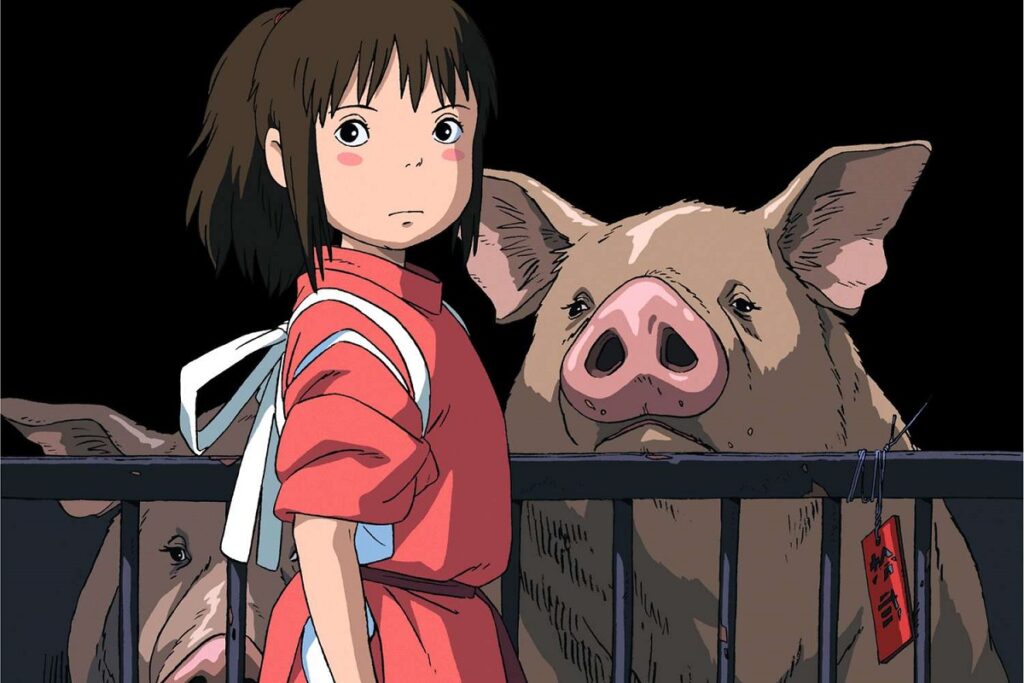
Hayao Miyazaki’s Spirited Away, made at Studio Ghibli, is one of the most important and interesting animated films ever. In the film, one of the world’s greatest animators, Hayao Miyazaki, takes viewers to an enchanting, mystical, adventurous, and fantastical world where a very young girl named Chihiro experiences the world of Kami, or spirits, for the first time in her life. In the world of Kami, Chihiro goes through an entire process of metamorphosis. So, when she finally returns, she is no longer the same person. She is transformed and more purified than her earlier version. Even though Miyazaki portrays a ten-year-old girl in the film, he metaphorically criticizes Japan’s shift from traditional Shintoism to a modern capitalist and secular society under Western influence in the 1980s. Traditional Japanese values were going into oblivion. So, Spirited Away is not simply an animated story of a ten-year-old girl lost in the world of Spirits. It is also a story of an ancient civilization that was losing its traditional culture and values.
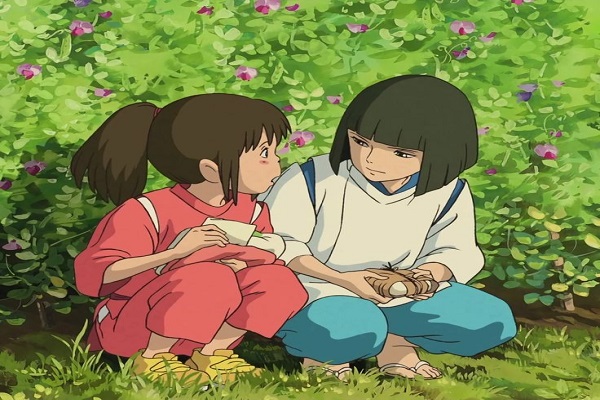
Miyazaki closely observes children and uses their expressions in his films. His friend’s ten-year-old daughter, who used to visit his family during summer holidays, inspired him to make this film. However, Miyazaki does not portray Chihiro’s character as a hero. Rather, he portrays her as an ordinary human who is initially afraid and vulnerable after entering the world of the Kami. However, she handles the situation calmly with the help of Haku. She loves everyone and gets that in return from everyone.
In Spirited Away, Miyazaki raises concerns about environmental pollution. One of the spirits or Kami who visits the bathhouse for cleansing is the stinking river spirit. When it is cleaned properly, it gets back its original form. Purification is an essential principle of Shintoism. Through this sequence, Miyazaki indirectly protests against environmental pollution. There is no doubt that mankind needs technical and economic advancement. However, that should not be at the cost of polluting natural resources.
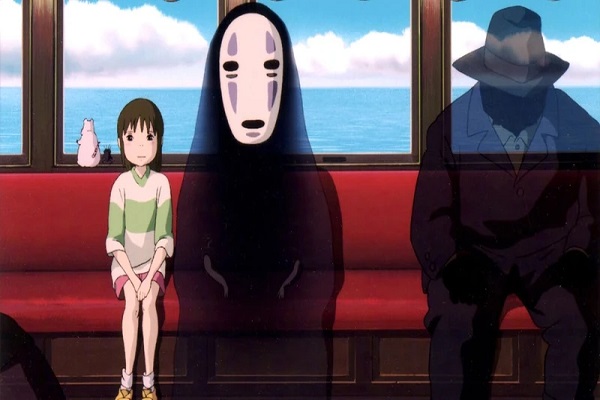
In Spirited Away, Hayao Miyazaki vividly shows the impact of our surroundings on us. No face is ferocious in the bathhouse and eats a few spirits, but gets changed after meeting Chihiro and agrees to work under Zeniba. So, there is no absolute good or evil. We act according to our surroundings and associations.
Spirited Away also shows how dislocation affects the lives of the children. When they are uprooted from their original places, they struggle to adjust to a new place again. However, it is also not possible or desirable to stick to the same place throughout our lives. When Chihiro is about to return to her parents, Haku warns her not to look back. Change is a part of our lives. Miyazaki advises us to embrace the change wholeheartedly without looking back.
Director Hayao Miyazaki’s left-leaning ideologies are reflected in Spirited Away. The entire boiler room setup, especially the way soot sprites operate there, reminds viewers of the poor working conditions faced by laborers in many parts of the world. However, the Western-influenced interior of the bathhouse and Yubaba’s costume are lavish and symbolise modern capitalist Japan. Miyazaki portrays a stark difference metaphorically between the victims and beneficiaries of a capitalist society.
After World War II, Japan was slowly shifting from a traditional Shintoist society to a modern Western-influenced capitalist and secular society. This trend reached its peak in the 1980s and continued until Japan’s stock bubble burst in 1991. Once children had cellphones, they tended to move from traditional Japanese values to secularism. Miyazaki’s Spirited Away is filled with multiple references to traditional Shintoist Japan. He also metaphorically criticizes capitalist Western influence on Japanese culture and society.
From the beginning, Spirited Away is heavily influenced by Shintoism and Japanese folklore. Viewers can see its reflections in multiple places. Filmmaker and master animator Hayao Miyazaki has depicted Chihiro’s experience in the world of Kami from the Shinto perspective. It is widely believed in rural Japan that Children are often spirited away to the world of Kami and returned after purification. In Shintoism, all natural elements and animals are Kami or spirits. However, they transform into Kami forms by following Shinto values and principles. When Chihiro and her parents stop by the tunnel, they see a torii (gate) beneath a tree, a hokora (the house of the spirits), and a dosojin (a spirit). Even before Chihiro enters the Kami world, viewers can connect the story to Shintoism, and it continues throughout the entire film. The depiction of Yubaba’s character, with a gigantic head and a Western-influenced luxurious costume, is deeply influenced by Yamauba, a mountain witch famous for her cunning and supernatural abilities, in Japanese folklore.
The two most important aspects of Shintoism are cleanliness and the worship of Kami or spirits and ancestors. The concept of the bathhouse in the film is directly inspired by the Shimosuki festival in rural Japan, when the rural Japanese people invoke Kami or spirits to bathe in sacred water in their bathhouses. In the film, spirits keep visiting Yubaba’s bathhouse for cleansing or purification. Chihiro is employed there to assist them in cleansing. All the natural elements and animals can transform into Kami only after purification. Our Kokoro, or cheerful heart, can be polluted, like the natural elements get polluted. However, we can cleanse it with Maokoto or sincerity toward others. We see Chihiro always following Makoto, and she finally rescues her parents.
Miyazaki created Spirited Away with mostly traditional hand-drawn animations frame by frame at Studio Ghibli, and then those frames were digitized. Each frame was drawn meticulously with great depth. He used minimal CGI animation in the film. Enough space was provided in between frames, as Miyazaki did not want to overwhelm viewers with packed action, like other animated films. Frequent Miyazaki collaborator Joe Hisaishi’s brilliant, soothing, orchestral music touches the hearts of the viewers and makes them inquisitive about Chihiro’s whereabouts in the Kami world.